


Every property listing in Kenya seems to promise strong returns. Agents quote yields, developers advertise "guaranteed rental income," and friends swear their apartment practically pays for itself. Then the first year ends and the numbers look nothing like the brochure. Rental yield is the one metric that cuts through the noise, and learning to calculate it properly, especially the net version, is what separates a genuinely good investment from an expensive lesson.
What rental yield actually is
Rental yield measures how much rent a property earns each year as a percentage of what you paid for it. It tells you how hard your money is working through rent alone, before counting any rise in the property's value over time.
There are two versions, and confusing them is the most common mistake investors make.
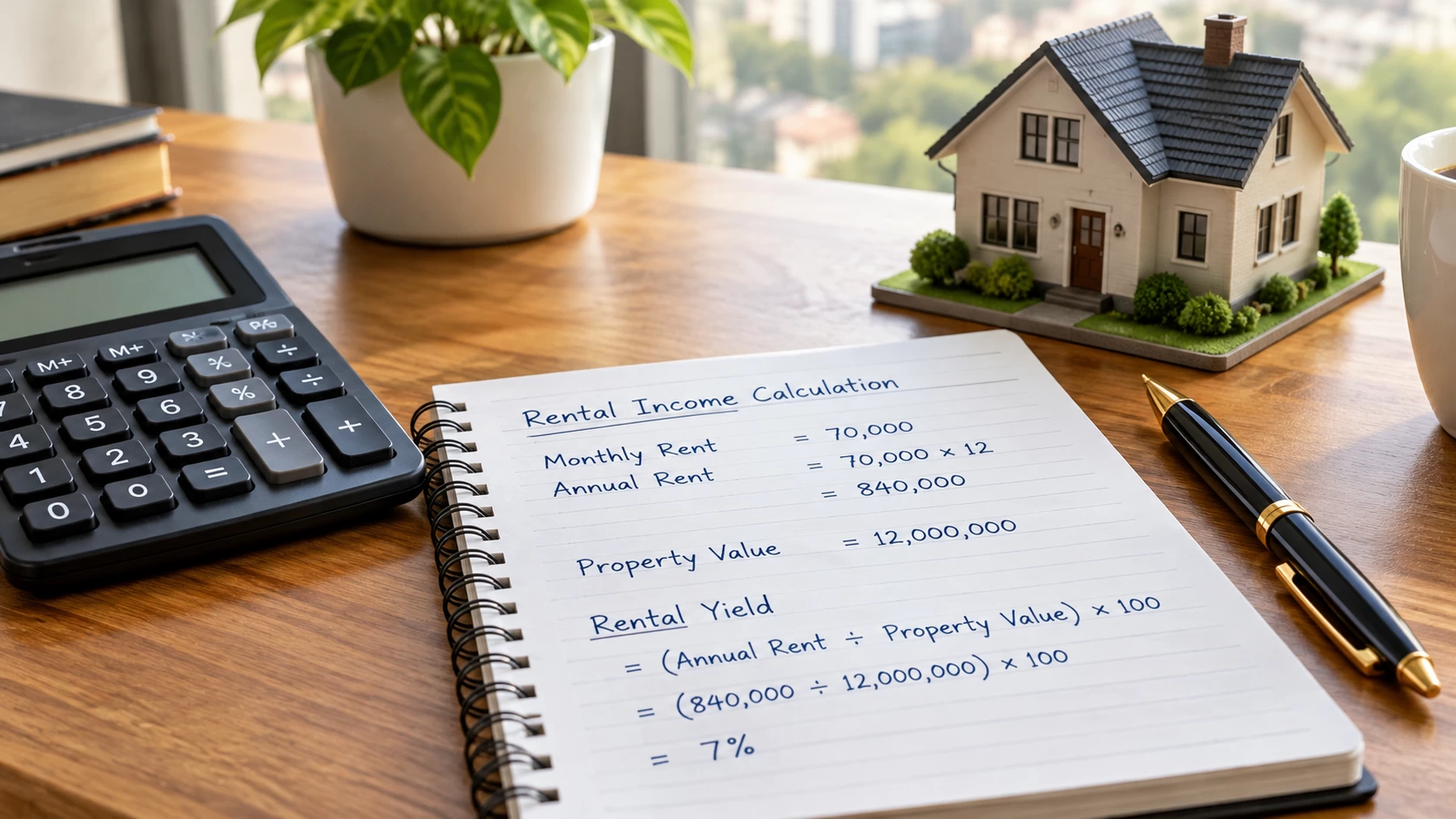
Gross rental yield is the simple headline figure:
Annual rent ÷ purchase price × 100
Net rental yield is the real figure, after the costs of owning and running the property come out of the rent:
(Annual rent − annual expenses) ÷ total investment cost × 100
Published yields, in brochures, listing sites, and most market reports, are almost always gross. The number that lands in your bank account is the net one.
A worked example
Say you buy a two-bedroom apartment for KSh 6,500,000 and rent it for KSh 40,000 a month.
- Annual rent: KSh 480,000
- Gross yield: 480,000 ÷ 6,500,000 = about 7.4 percent
Now add the real costs of ownership, using illustrative figures:
- Service charge: KSh 36,000 a year
- Property management at 8 percent of rent: KSh 38,400
- Vacancy allowance, roughly two weeks empty: KSh 20,000
- Repairs and maintenance: KSh 20,000
- Land rates and insurance: KSh 12,000
- Residential rental income tax at 10 percent of gross rent: KSh 48,000
That is about KSh 174,400 in annual costs, leaving KSh 305,600 in net income.
Your total investment is also more than the sticker price. Stamp duty, legal fees, and registration typically add around 6 percent or more, so assume roughly KSh 6,890,000 invested in total.
- Net yield: 305,600 ÷ 6,890,000 = about 4.4 percent
The same apartment that advertised a 7.4 percent return actually delivers around 4.4 percent. Nothing dishonest happened, the gross figure was simply never the whole picture.
The costs that quietly eat into your yield
- Service charges. In some Nairobi buildings these can swallow 15 to 20 percent of gross rent, so always ask for the current figure and the building's history of increases.
- Management fees. Typically 8 to 12 percent of rent if you use a property manager.
- Vacancy. No property is let every single day. Budget for gaps between tenants, especially in areas with lots of competing supply.
- Repairs and maintenance. Plumbing, repainting, and replacing fittings between tenants add up over the years.
- Land rates, ground rent, and insurance. Small individually, but recurring.
- Tax. Residential rental income is taxed at 10 percent of gross rent for most small landlords, a figure that applies whether or not your costs were high that year. If you let short term instead, see our guide on Airbnb and short let rules for how the tax treatment changes.
- Purchase costs. Stamp duty and legal fees belong in your investment cost, not as an afterthought.
What counts as a good yield in Kenya
There is no single magic number, and sources report different averages because they measure different things. Recent market reports put average apartment yields across the Nairobi Metropolitan Area in a range from roughly 6 percent to 7.4 percent gross, depending on the dataset and period, with detached houses generally lower. As a practical guide:
- Premium suburbs such as Karen and Runda: often 4 to 6 percent gross. Investors accept lower income here in exchange for stronger long-term capital growth.
- Mid-range Nairobi areas: commonly 6 to 8 percent gross.
- Satellite towns such as Ruaka, Syokimau, Kitengela, Ruiru, and Juja: frequently 7 to 10 percent gross, with net figures usually landing a few points lower.
- Furnished and serviced apartments in strong locations: can reach 8 to 12 percent gross or more, but demand active management and a higher upfront outlay, and returns swing more with occupancy.
Remember that net yield is usually 1.5 to 3 percentage points below gross, sometimes more. A 5 to 6 percent net return is generally considered solid for stable Nairobi rental property, and anything below 5 percent gross usually means you are really buying for capital growth rather than income.
Yield is not the whole story
A high yield can hide problems, and a low one can be perfectly sensible. Keep these in mind:
- Capital growth matters. Total return is rental income plus the change in the property's value. A modest yield in an area with strong appreciation can beat a high yield on a property whose value is flat or falling.
- Cheap does not mean good. Very high yields sometimes reflect weak demand, poor build quality, or high vacancy in an oversupplied area.
- Borrowing changes the maths. Commercial bank lending rates sit around 14 to 15 percent. If you buy with a mortgage at that rate and the property nets 4 to 6 percent, the rent will not cover the interest, and your return depends on the property appreciating. Treat leveraged rental investing as a bet on growth, not on income.
- Currency matters for diaspora investors. Yields are quoted in shillings. If you are measuring returns in dollars or pounds, exchange rate movement can add or subtract from what you actually take home.
Traps to avoid
- Quoted yields with no basis. Always ask what rent the number is based on, and check it against what comparable units in the same building or estate actually let for.
- "Guaranteed returns" on off-plan units. Treat these with extreme caution, and read the contract closely for what happens if the guarantee is not honoured. Our guide to buying off-plan property covers the protections to insist on.
- Gross figures presented as the full story. If a seller only ever quotes gross yield, ask for the net calculation.
- Ignoring the building's running costs. A high service charge or heavy maintenance backlog can erase the advantage of a good rent.
A quick checklist before you buy
- Confirm the realistic monthly rent by checking several comparable listings and speaking to local agents.
- Calculate gross yield from the purchase price.
- List every annual cost, including service charge, management, vacancy, repairs, rates, insurance, and tax.
- Add purchase costs to your total investment, then calculate net yield.
- Compare net yield with your alternatives, including simply earning interest in a fixed deposit or money market fund.
- Consider the area's growth prospects, tenant demand, and how easy the property would be to resell.
The bottom line
This article provides general information for educational purposes only, not financial advice. Yields, costs, and tax treatment vary by property, location, and landlord circumstances and change over time. Always run your own numbers using current figures, and consult a qualified financial advisor or tax professional before investing.