


Ask ten Kenyan builders whether they need NEMA approval for their project and you will probably get ten different answers. Some insist it only applies to factories and mines. Others have been told by a county officer that every single building needs it. The truth sits somewhere in between, and understanding exactly where your project falls can save you from either an unnecessary expense or a very expensive stop order halfway through construction.
What NEMA actually does
The National Environment Management Authority (NEMA) is the government agency responsible for enforcing the Environmental Management and Coordination Act (EMCA). For construction, its main tool is the Environmental Impact Assessment (EIA), a formal study of how a project might affect the surrounding environment, along with a plan for reducing any harm. If NEMA is satisfied, it issues an EIA licence, which is the document people usually mean when they say "NEMA approval."
The legal weight here is significant. EMCA bars any licensing authority, including county governments, from granting a development permit for a project that requires an EIA unless the applicant already holds a valid licence. Starting construction on a project that needs an EIA licence before one is issued is a direct violation of the Act.
When you actually need it
Kenya's EIA rules classify projects by risk level, which determines both whether an EIA is required and how detailed it must be:
- Low risk projects submit a summary project report, handled online.
- Medium risk projects submit a comprehensive project report, filed through the relevant NEMA county office.
- High risk projects require a full EIA study report, publicly gazetted and published in newspapers, with a mandatory public consultation period.
In practical terms, NEMA licensing applies far more often to commercial, industrial, and large residential developments than to a single family home. But the line is not always clean. Any project involving meaningful excavation, significant waste generation, heavy traffic impact, or construction near sensitive features like rivers, wetlands, or riparian reserves should assume NEMA involvement will be required. And in practice, many counties ask for a NEMA approval certificate as part of the broader building approval package even for ordinary residential projects, so confirming your specific requirement early matters more than assuming either way.
The safest move for any project near the grey area is to submit a screening request to NEMA directly and get a written answer on what level of assessment, if any, applies to you.

What it costs
NEMA's official licensing fee is 0.1 percent of the total project cost, with a minimum of KSh 10,000, calculated from a certified Bill of Quantities that must accompany the application. That means a KSh 20 million project would carry a licensing fee of around KSh 20,000, while anything below KSh 10 million still pays the KSh 10,000 minimum.
A few other fees are worth knowing about:
- Licence extension or modification: roughly KSh 5,000
- Inspection fees: a small per-visit charge
- A separate professional fee payable to your EIA expert, which is not part of NEMA's own charges and varies widely depending on the project size and complexity
That last point catches a lot of people off guard. The licensing fee is usually small. The consultant's fee, plus costs for baseline testing, public participation, and report preparation, is what actually drives the total cost of getting approval.
How the process works
- Engage a NEMA-registered EIA expert. Only registered experts can prepare and submit EIA reports. The register of experts is public, so verify their registration before hiring.
- Screening. Your expert submits a project description to NEMA to confirm whether an EIA is required and at what level.
- Prepare the report. Depending on risk level, this is a summary report, a comprehensive report, or a full study. It must include a certified Bill of Quantities showing the project cost.
- Public participation. For higher risk projects, notices must be published and affected communities consulted, with a mandatory comment period.
- Submit and pay online. Applications and payments are handled through the eCitizen NEMA licensing portal.
- NEMA review and site inspection. Officers review the report and may visit the site before deciding.
- Licence issued, often with conditions. The licence typically comes with ongoing compliance requirements you must follow during and after construction.
How long it takes
Timelines depend heavily on project risk. Smaller projects needing only a summary report or environmental audit can move in a matter of weeks. Larger developments requiring a full EIA can take several months once baseline studies, public consultation, and the review period are included. NEMA itself advises applying at least three months before your intended start date, and building in extra time if your project is large or sits near sensitive land.
Where NEMA fits in the wider approval chain
NEMA approval is one piece of a connected process, not a standalone step. In most cases it sits alongside county building plan approval and National Construction Authority (NCA) project registration, and the NCA generally requires a valid NEMA approval certificate as part of its own submission package. The exact order can vary by county and project type, with some projects starting the EIA process in parallel once the architectural concept is settled, so confirm the sequence with your county planning office before assuming a fixed order.
What happens if you build without it
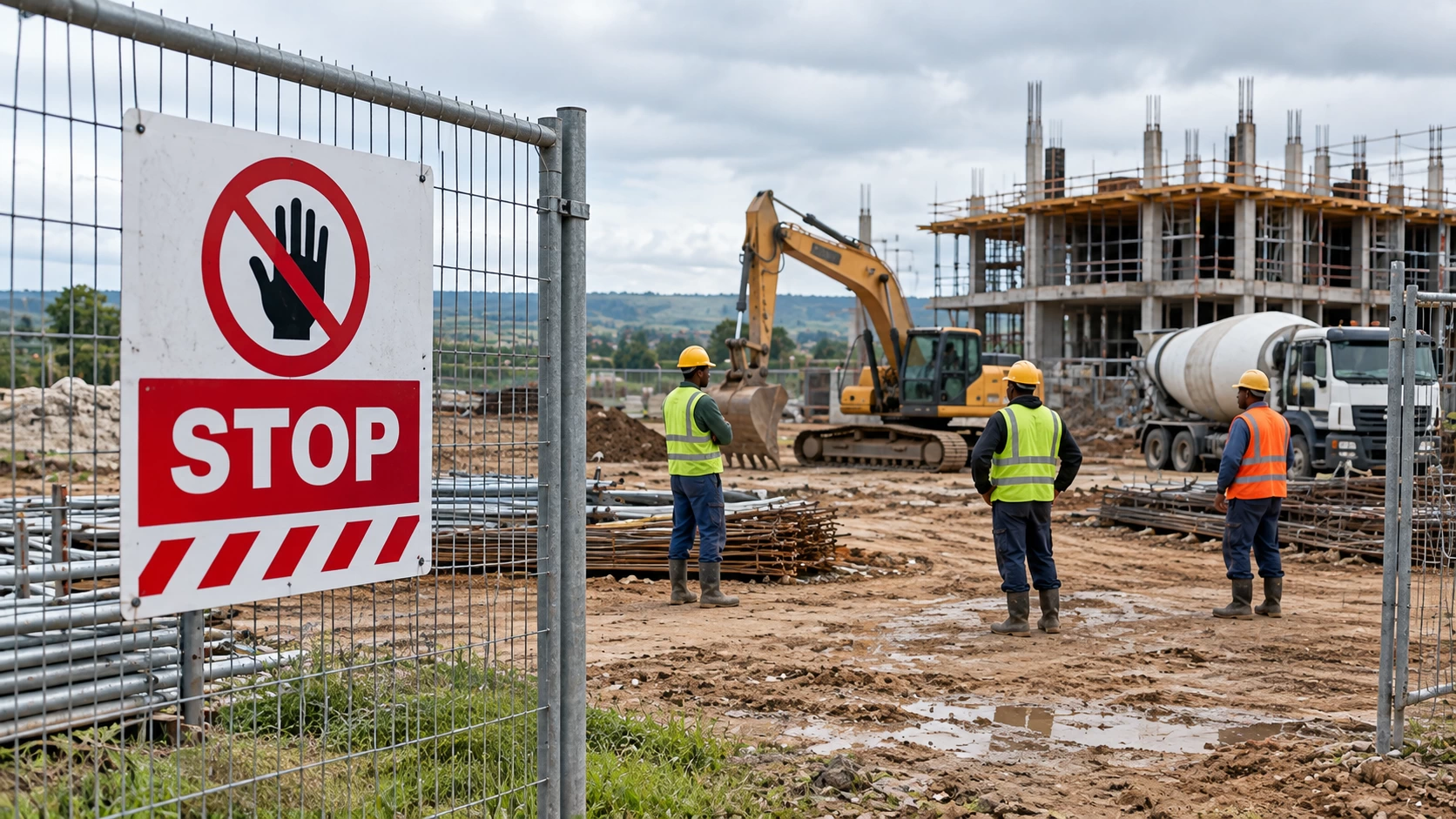
Skipping a required NEMA approval is one of the most expensive shortcuts in Kenyan construction. Possible consequences include:
- Stop orders halting work mid-project, with idle labour and equipment costs piling up daily
- Penalties and prosecution under EMCA
- Blocked approvals elsewhere, since other permits and licences may be refused without a valid EIA licence
- Difficulty with financing and resale, as lenders and buyers increasingly check environmental compliance
- Possible demolition orders for structures built in violation, especially near protected areas like riparian reserves
A NEMA licence also does not protect you from civil claims or prosecution if the project is later run or managed in a way that causes harm. It is a starting point for compliance, not a blanket shield.
The bottom line
This article provides general information for educational purposes only, not legal advice. NEMA requirements, fees, and processes vary by project type and location and change over time. Always confirm current requirements directly with NEMA or your county planning office, and engage a registered EIA expert before starting any project that may require approval.