


Land fraud remains one of the most common and most devastating scams in Kenya. Fake title deeds, double sales, and land quietly carrying a bank charge or a court caution have cost buyers millions of shillings, often life savings. The single most important step you can take before handing over any money is a land search, and today, you can run one from your phone in a matter of minutes through Ardhisasa, the government's digital land registry.
Here is exactly how it works.
What a land search actually tells you
A land search is an official inquiry into the government's land records. It confirms:
- Who the registered owner of the parcel actually is
- The size and legal description of the land
- Whether there are any charges, mortgages, or bank interests registered against it
- Whether there are caveats, cautions, or court orders restricting a sale
- The recent ownership history of the parcel
The result comes back as an official, digitally signed search certificate that carries legal weight. Banks accept it for loan applications, lawyers use it during conveyancing, and it can be used as evidence in court if a dispute arises later.
Where to do it: Ardhisasa vs eCitizen
Kenya's land search system is still transitioning. Ardhisasa is the government's fully digital land registry and is currently the primary platform for Nairobi and Murang'a counties, with active rollout into Kiambu, Isiolo, Mombasa, and Machakos. For land in most other counties, searches are still processed through the eCitizen portal, which follows a very similar process. If your parcel falls outside a fully digitised county, some records may still require a physical search at the local Land Registry.
Always check which system covers your parcel before starting, since applying on the wrong platform will simply return no results.
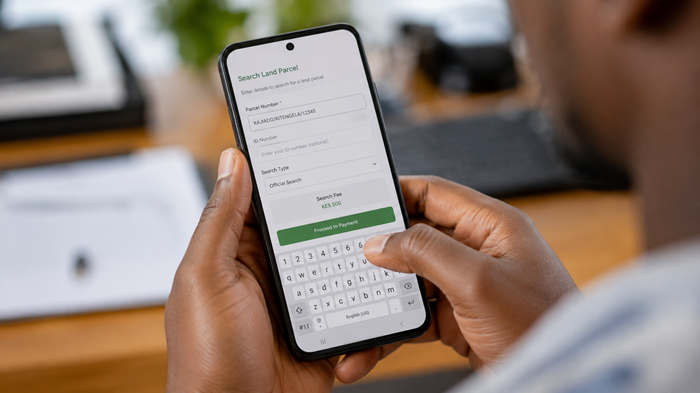
How to conduct a land search on Ardhisasa, step by step
- Create your account. Go to the official Ardhisasa portal and register using your National ID number, KRA PIN, phone number, and email address. Verification is done through an SMS code.
- Log in and go to Services. From your dashboard, select Services, then Land Search, then start a new application.
- Enter the parcel number. Use the exact parcel or title number as it appears on the title deed. Double check every digit, since a small typo will return an error or the wrong parcel entirely.
- State the purpose and scope of the search. You will be asked to indicate why you are searching and what level of detail you need.
- Pay the search fee. The standard fee is KSh 500 per parcel, payable through M-Pesa, debit card, or bank transfer directly on the platform. Some recent reports point to fees rising in certain categories, so confirm the exact amount shown at checkout before you pay.
- Wait for owner notification, where applicable. For some parcels, the registered owner receives a notification and may need to acknowledge the search request before results are released. If a seller seems to be dragging their feet on this step, treat it as a warning sign, not a technical delay.
- Download your certificate. Once processed, your official search certificate is available as a PDF, typically within 24 hours to 3 working days depending on system traffic.
What to do if your county is not on Ardhisasa yet
If your parcel is outside Ardhisasa's current coverage, use the eCitizen portal instead. The process is nearly identical: log in, navigate to Ministry of Lands services, select Land Search, enter your title or parcel number, pay the KSh 500 fee, and download your Certificate of Official Search once it is ready.
For parcels in areas where digitisation is still incomplete, especially some rural registries, you may need to visit the county Land Registry in person with a completed search form and your ID.
Red flags to watch for in your results
- The name on the search does not match the person selling to you. This alone should stop the transaction until it is fully explained and resolved.
- There is an active caveat, caution, or restriction on the title. This means someone else has a registered legal interest or dispute over the land.
- There is an unreleased charge or mortgage. The land may still be pledged to a bank as security for a loan that has not been cleared.
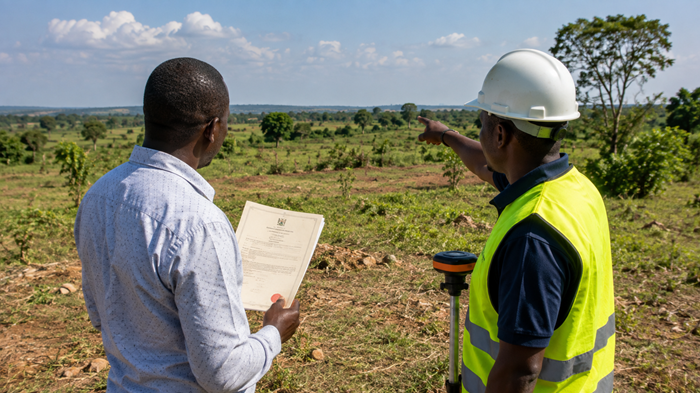
- The registered size does not match what you were shown on the ground. Always cross check the search certificate against a physical site visit.
- The seller resists or delays the search. A legitimate owner has no reason to avoid a KSh 500 search that protects both parties.
Beyond the search: what else to verify
A land search confirms what the registry says, but it does not replace a physical inspection. Before you commit any money:
- Visit the site in person and confirm the boundaries match the search certificate and the survey plan.
- Engage a licensed surveyor if there is any doubt about boundaries, especially for subdivided parcels. A full boundary survey typically costs from KSh 30,000 upward, depending on size and location, and is a small price against a multi-million shilling purchase.
- Involve an advocate to review the title, draft or vet the sale agreement, and handle the transfer. Advocates are required to conduct their own search before any transfer is registered.
- Ask about the Limitation of Actions Act. Under Kenyan law, a person who has openly and continuously occupied land for 12 years without the owner's permission may, in some circumstances, be able to claim ownership through adverse possession. If the land has sat unused for years, this is worth asking about.
The bottom line
A land search costs a few hundred shillings and takes a matter of minutes to initiate. Skipping it has cost Kenyan buyers their life savings. Before you pay any deposit, confirm the seller's identity matches the registered owner, check for any charges or caveats, and follow up with a physical site visit and a licensed advocate before you sign anything. It is the cheapest insurance policy in the entire home buying process.