
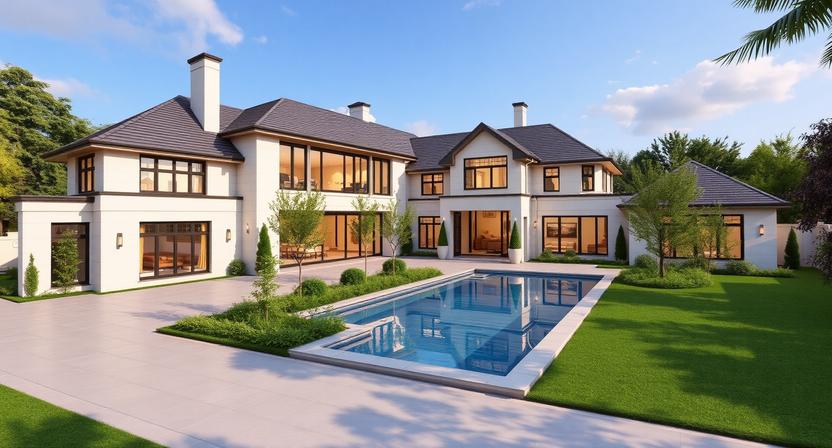

Building your own home in Kenya is one of the most rewarding decisions you will ever make. There is nothing quite like watching a structure rise from a bare piece of land into a place you will call home. But before you lay a single stone, one question dominates every builder's mind: how much will this actually cost me?
The answer is not a single number — it depends on your location, the size of your house, the quality of finishes you choose, and the professionals you work with. But this guide cuts through the guesswork and gives you real, up-to-date 2026 figures so you can plan your budget with confidence.
Let's break it all down.
📊 The Big Picture: Cost Per Square Metre in Kenya 2026
The most reliable way to estimate construction costs in Kenya is by using the cost per square metre (m²) — the amount it costs to build every single square metre of your house. Multiply this by your house's total floor area and you get a ballpark total.
Construction expenses have experienced significant changes in 2026, with an overall average increase of 12.09% compared to 2025. Here is the current breakdown by finish quality:
| Finish Level | Cost Per m² (KES) |
|---|---|
| Low-end / Basic | KES 35,000 – 45,000 |
| Mid-range / Standard | KES 50,000 – 65,000 |
| High-end | KES 70,000 – 95,000 |
| Luxury | KES 100,000+ |
On average, a mid-range residential project in Kenya costs approximately KES 50,000–70,000 per square metre, while high-end or luxury constructions can exceed KES 100,000 per m². Lower-cost projects may start at KES 35,000/m², particularly in rural areas or when using budget materials.
ðŸ How Much Does It Cost to Build by House Type?
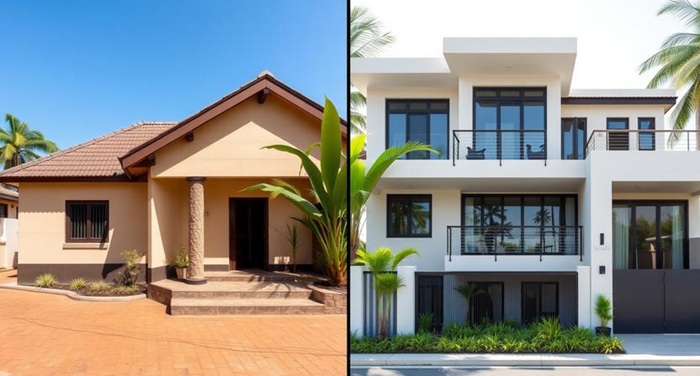
Different house types carry different costs. Here is what you should expect in 2026:
🔹 2-Bedroom House
A simple 2-bedroom home (roughly 70–80 m²) is the most affordable option for first-time builders.
- Low-end build: KES 2.5M – 3.5M
- Mid-range build: KES 3.5M – 5M
- Mabati (iron sheet) house: KES 700,000 – 1M
🔹 3-Bedroom House (Most Popular)
The 3-bedroom bungalow is the most commonly built home in Kenya. House construction costs in Kenya for a 3-bedroom house range from KES 3.8 million to KES 5.4 million depending on finish quality and location.
- Low-end build: KES 2.5M – 3.5M
- Mid-range build: KES 3.5M – 5M
- High-end build: KES 5M – 7M
A 3-bedroom house of 100 m² in Nairobi with mid-range finishes may cost KES 4.5 million to 5.5 million, while in rural areas, a 3-bedroom brick house ranging from KES 2.8 million to KES 3.4 million.
🔹 4-Bedroom House / Maisonette
A 4-bedroom home or maisonette (120–160 m²) is a step up for larger families or those wanting extra space.
- Standard bungalow (per m²): KSh 49,770 per square metre
- Middle-class maisonette (per m²): KSh 59,945 per square metre
- Luxurious bungalow (per m²): KSh 77,000 per square metre
Medium homes of 120–160 m² are usually priced KES 5 million – 11 million, influenced heavily by design complexity and materials used.
🔹 Large / Luxury Home (5+ Bedrooms)
Large residences of 170–250 m² in urban counties like Nairobi and Mombasa can cost KES 14 million – 18 million, while in less dense areas, prices are slightly lower.
📠How Location Affects Your Building Cost
Where you build in Kenya has a major impact on how much you will spend. Labour availability, transport of materials, and demand all vary by region.
Nairobi & Surroundings (Most Expensive)
Building in Nairobi is more expensive than in other regions. Central locations cost 25–30% above the national average, while the outskirts can be cheaper by about 10–15%.
- Cost range: KES 48,750 – 84,000 per m²
Mombasa & Coast Region
On the Coast, construction costs are influenced by the need for sea-weather-resistant materials, such as corrosion-resistant roofing, treated timber, and strong concrete foundations to withstand humidity and salt air. A 120 m² bungalow in Mombasa with standard finishes may cost approximately KES 6,600,000, while luxury finishes can exceed KES 13,000,000.
- Cost range: KES 55,000 – 110,000 per m²
Western Kenya & Kisumu (Most Affordable Urban Zone)
Western Kenya, including Kisumu, generally has lower construction costs due to cheaper labour and locally available building materials. A 100 m² maisonette in Kisumu with standard finishes may cost about KES 5,000,000–6,500,000.
Rural Areas (Cheapest)
Rural construction costs range from KES 14,000 to KES 20,000 per square meter for simple brick houses. However, the cost of transporting materials to remote areas can offset some of these savings, so factor that in early.
🧱 Current Building Materials Prices in Kenya 2026
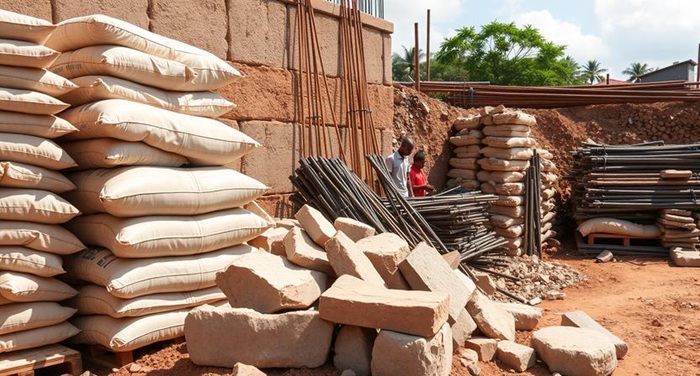
Materials typically account for 50–60% of your total construction cost. Here is what you are paying right now:
Cement
A 50kg bag of cement in Kenya currently averages around KSh 750 in Nairobi. Here are specific brand prices as of 2026:
| Brand | Price Per 50kg Bag |
|---|---|
| Simba 32.5R | KES 735 |
| Rhino Cement | KES 750 |
| Bamburi Fundi | KES 780 |
| Bamburi Tembo | KES 800 |
| Blue Triangle | KES 755 |
| Bamburi Powermax | KES 1,350 |
For a standard 3-bedroom house in Kenya, you will need approximately 250–350 bags of cement.
Steel / Reinforcement Bars (Rebars)
Steel prices are volatile, but quality reinforcement is critical for structural integrity. The price range is KES 95,000 – 120,000 per ton.
Steel reinforcement bars (D8–D25) range from KSh 450–4,400 per bar.
Stones / Walling Materials
Machine-cut stones are selling at around KSh 20–25 per piece. A 3-bedroom house uses approximately 2,700 pieces of machine-cut stones.
Roofing Materials (Mabati / Iron Sheets)
Roofing sheets such as mabati cost between KSh 550–1,000 per metre, while tiles range from KSh 550–1,250 per box depending on size and finish.
For premium roofing: Stone-coated Aluzinc roofing tiles cost KSh 2,600 – 3,000 per square metre, while clay roofing tiles cost KSh 1,400 – 3,200 per square metre depending on tile size and finish.
Finishing Materials
Tiles cost KES 1,000 – 3,500 per m², and paint costs KES 1,200 – 4,500 per 20-litre bucket.
👷 Labour Costs in Kenya 2026
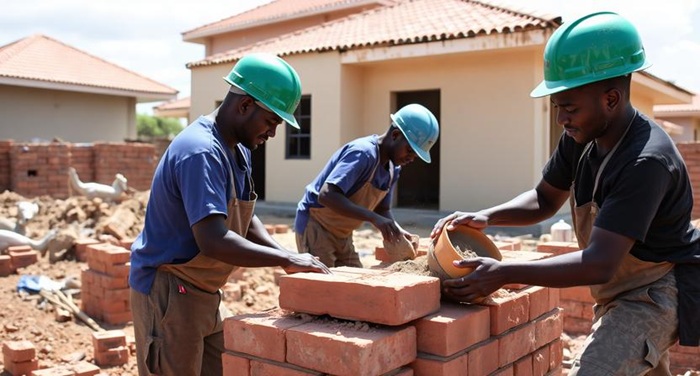
Labour is the second biggest cost driver in any construction project. Kenya's construction labour is divided into unskilled, semi-skilled, and skilled workers. Daily wages for unskilled labour range between KES 400 – 800, while skilled tradespeople earn KES 1,200 – 2,000 per day. Experienced foremen or supervisors can charge KES 2,500 – 3,500 daily.
Nairobi leads with the highest labour rates in the country. If you are building upcountry, you can save significantly on labour — but you may need to bring in skilled specialists from town for certain tasks like tiling, electrical, and plumbing.
âš ï¸ Hidden Costs Most People Forget
This is where many first-time builders get caught off guard. Your construction budget must account for more than just bricks and cement. Many first-time builders underestimate the hidden costs that significantly affect overall budgets. Excavation, grading, and levelling can cost KES 200,000 – 800,000 depending on soil condition, and drainage systems are essential in flood-prone regions.
Here are the hidden costs to budget for:
Professional Fees. Professional fees for architects, structural engineers, and quantity surveyors are charged separately, typically 8–15% of construction cost. On a KES 5M build, that is KES 400,000 – 750,000 in professional fees alone.
Building Approvals & Permits. County council approvals, NEMA approvals, and NCA registration are all mandatory and come with fees that vary by county. Budget at least KES 50,000 – 200,000 for this depending on location and house size.
Land Preparation. Clearing, levelling, and preparing your site can cost KES 200,000 – 800,000 depending on the terrain and existing vegetation.
Utility Connections. Connecting water, electricity (Kenya Power), and sewerage to your new home adds costs that most people underestimate — easily KES 100,000 – 400,000 depending on how far your plot is from existing infrastructure.
Fencing & Landscaping. A perimeter wall around your plot typically costs KES 7,000 – 10,000 per running metre, meaning a standard 50x100ft plot (66 running metres) will cost roughly KES 460,000 – 660,000 just for the fence.
Contingency Budget. Always add 10–15% of your total budget as a contingency. Material prices shift, weather delays happen, and designs get revised. A buffer saves projects.
💡 Factors That Determine Your Final Cost
The land determines a lot in the cost of building. Is the land flat? Will you need to move rocks or fill it with stones? The size of the house matters too — it costs more to build a small home than a bigger residence because when building a bigger house the cost is distributed over the land area.
The shape also has an effect on cost. Houses with rectangular shapes cost less to build, while those with more angles and corners tend to cost more because angles and corners increase labour and material input.
Here is a summary of the key cost factors:
1. Location — Nairobi and Mombasa are more expensive than rural areas. Transport of materials to remote sites adds significant cost.
2. House Size — The larger the floor area, the lower the cost per m² tends to be due to economies of scale on materials.
3. Finish Level — Two houses with identical floor plans and structure can differ by KSh 30,000–50,000 per m² due to finish choices alone.
4. Design Complexity — Open-plan layouts, intricate roof structures, and high-end finishes all push costs higher. Simplifying the design or standardizing window and door sizes can save substantially.
5. Season — Building during the dry season avoids delays caused by rain, which can increase labour and material costs.
💰 Is It Cheaper to Build or Buy in Kenya?
Great question — and the answer might surprise you. Building your own house is generally 20–30% cheaper than buying a comparable existing property in Kenya. Building allows full control over quality and design, and can be phased according to budget.
This means if a finished 3-bedroom house is selling for KES 7M in your area, building the same house yourself could cost you as little as KES 4.9M – 5.6M. The savings are real — but they require your time, attention, and active involvement in the project.
ðŸ-ï¸ Tips to Reduce Your Construction Costs in Kenya
You do not need an unlimited budget to build a quality home. Here are practical ways to keep your costs under control:
Keep the design simple. Work with a professional to simplify layouts, reduce unnecessary corridors, and optimize the structural grid. Every square metre counts in cost efficiency.
Source materials locally. Select materials that are locally sourced, durable, and cost-effective. Using reinforced concrete blocks instead of imported brick or opting for corrugated metal roofs in some regions can save significantly.
Buy materials in bulk. Bulk procurement is particularly effective for cement, steel, roofing materials, and tiles. Buying in bulk from a single supplier often unlocks discounts of 5–15%.
Phase your construction. If budget constraints are an issue, consider phased construction — start with the essential structure and add extensions or finishing touches later as funds allow. This approach spreads costs over time without delaying the overall project.
Supervise your project actively. Taking an active role in project management — such as supervising deliveries, scheduling labour, and coordinating contractors — can reduce overhead costs and avoid inefficiencies.
Consider prefabrication. A 3-bedroom prefab house can cost 20–30% less than conventional builds, and construction timelines are significantly shorter too.
🔢 Quick Cost Summary Table
| House Type | Size (m²) | Estimated Cost (KES) |
|---|---|---|
| 2-Bedroom Bungalow | 70–80 m² | 2.5M – 4.5M |
| 3-Bedroom Bungalow (Rural) | 100 m² | 2.8M – 3.4M |
| 3-Bedroom Bungalow (Nairobi) | 100 m² | 4.5M – 5.5M |
| 4-Bedroom Maisonette | 140 m² | 7M – 11M |
| Luxury Home (5+ Bed) | 200 m² | 14M – 18M |
| Mabati 3-Bedroom (Rural) | — | 1M – 1.5M |
🚀 Final Thoughts
Building a house in Kenya in 2026 is absolutely achievable — but only if you plan properly and budget realistically. By knowing the cost per square metre, homeowners and developers can estimate total construction expenses, avoid budget overruns, and make informed decisions about materials, finishes, and design choices.
The most important thing is to start with a clear budget, work with qualified professionals, and never skip the planning phase. A good architect, a reliable structural engineer, and an honest contractor are worth every shilling.
Looking for verified construction professionals, architectural house plans, and construction materials in Kenya? Visit The Homes Lab — Kenya's all-in-one home platform where you can find architects, engineers, contractors, building materials, and house designs all in one place.
👉 Browse Professionals on The Homes Lab 👉 Find House Designs & Plans 👉 Source Construction Supplies