


Buying Land in Kenya: 10 Things You Must Check Before Paying
Buying land in Kenya is one of the biggest financial decisions you will ever make. It can build generational wealth — or become a generational headache. Every year, thousands of Kenyans lose money to land fraud, boundary disputes, and illegal sales. The painful truth? Most of these losses were completely avoidable.
This guide gives you the 10 non-negotiable things to verify before you pay a single shilling — whether you are buying in Nairobi, the outskirts, or upcountry.
🔟 The 10 Things to Check Before Buying Land in Kenya
1. ✅ Verify the Title Deed is Genuine
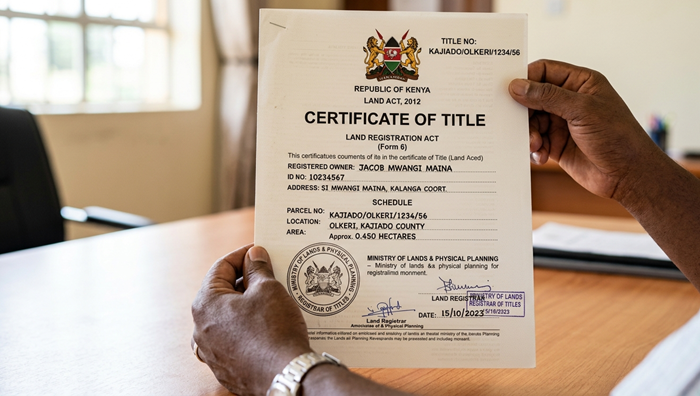
The title deed is the most important document in any land transaction. A genuine title deed confirms legal ownership and is issued by the Ministry of Lands and Physical Planning.
How to verify:
- Ask the seller for the original title deed — not a photocopy
- Check the title number, parcel size, and registered owner's name
- Confirm it matches the land being sold to you physically
- Do an official land search on Ardhisasa (see our guide on The Homes Lab Community) to confirm the title is registered in the government system
âš ï¸ NB: Fake title deeds are common in Kenya. A title deed that looks legitimate is not enough — only an official Ardhisasa land search confirms it is real and registered.
2. ✅ Confirm the Seller is the Registered Owner
This sounds obvious — but it is where many buyers get caught. The person selling you land must be the registered legal owner, or a person with written legal authority to sell on the owner's behalf (such as a Power of Attorney holder or an estate administrator).
What to do:
- Ask for the seller's National ID and compare the name to the title deed
- If they are acting on behalf of someone else, demand to see the original Power of Attorney document — and verify it with a lawyer
- Cross-check the registered owner's name on the Ardhisasa land search results
âš ï¸ NB: If the name on the title deed does not match the person standing in front of you — and they cannot provide legal authority to sell — walk away. Do not negotiate. Do not pay a deposit.

3. ✅ Check for Cautions, Caveats, and Charges
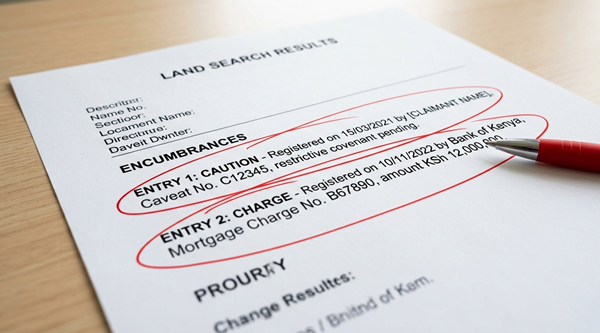
Even if the title deed is genuine and the seller is the real owner, the land may still be legally encumbered — meaning someone else has a legal interest in it that could block your purchase or ownership.
Common encumbrances in Kenya:
- Caution — placed by a spouse, co-owner, or interested party to prevent a sale
- Caveat — a court-ordered restriction on the land
- Charge — the land is used as collateral for a bank loan or mortgage
All of these appear on the official Ardhisasa land search results under "Encumbrances."
âš ï¸ NB: A charge registered on land means a bank has legal claim over it. The seller must get a discharge of charge from the bank before the land can legally be transferred to you.
4. ✅ Do a Physical Site Visit — More Than Once
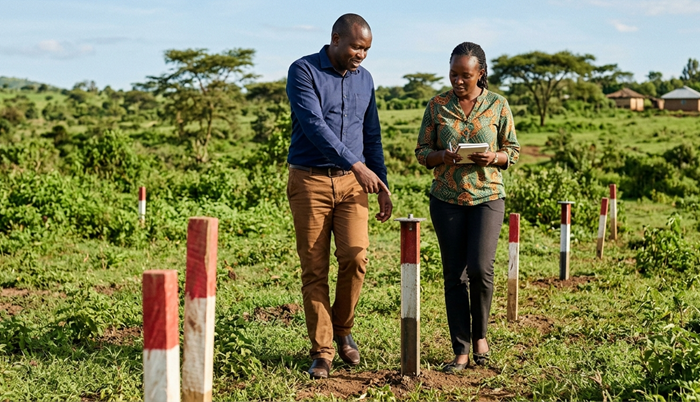
Never buy land you have not personally visited. Photos, videos, and maps are not enough. Sellers and brokers have been known to show buyers a different piece of land from what is on the title deed.
What to look for on site:
- Physical beacons (survey pegs) marking the boundaries
- Access road — is there a legal access route to the land?
- Neighbouring land use — factories, dumpsites, or quarries nearby affect value
- Natural hazards — is it on a slope, floodplain, or riparian reserve?
- Actual size — does it feel like the stated acreage?
💡 Tip: Visit the land at different times — once during the day and once after heavy rain. Flooding, poor drainage, and marshy ground are often only visible after rainfall.
5. ✅ Hire a Licensed Surveyor to Confirm Boundaries
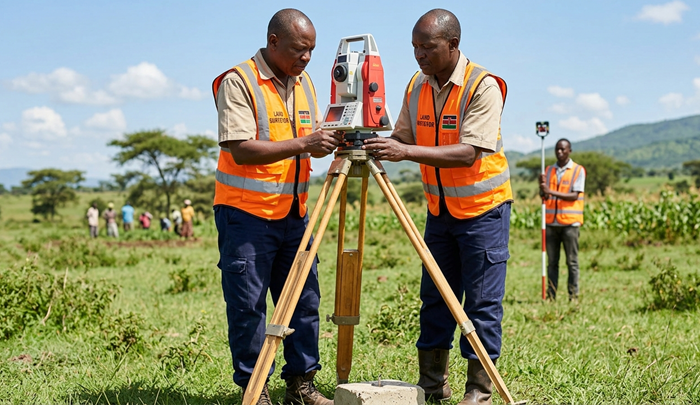
Once you have visited the land, hire an independent, licensed surveyor to confirm that the physical boundaries match what is on the title deed and survey map. Boundary disputes are one of the most common — and most expensive — problems in Kenyan land ownership.
What a surveyor does:
- Locates and confirms all survey beacons
- Verifies the parcel against the official survey map (from the Survey of Kenya)
- Issues a report confirming boundaries are intact
âš ï¸ NB: Never rely on the seller's own surveyor. Always hire your own — independently and directly.
💡 Tip: Find licensed surveyors near you on The Homes Lab Professionals — browse, compare, and contact directly.
6. ✅ Check the Land Rates and Land Rent Status
Land in Kenya attracts two recurring government charges:
- Land Rates — paid to the County Government based on the land's value (mainly for urban/municipal land)
- Land Rent — paid annually to the National Government for leasehold land
If these are unpaid, the arrears become your liability the moment the land is transferred into your name.
How to check:
- Land rent status is visible on the Ardhisasa land search results
- Land rates clearance certificate is issued by the relevant County Government
- Always ask the seller to provide a clearance certificate for both before signing anything
âš ï¸ NB: Sellers are legally required to clear all land rates and land rent arrears before a valid transfer can occur. Do not assume it has been done — demand documentary proof.
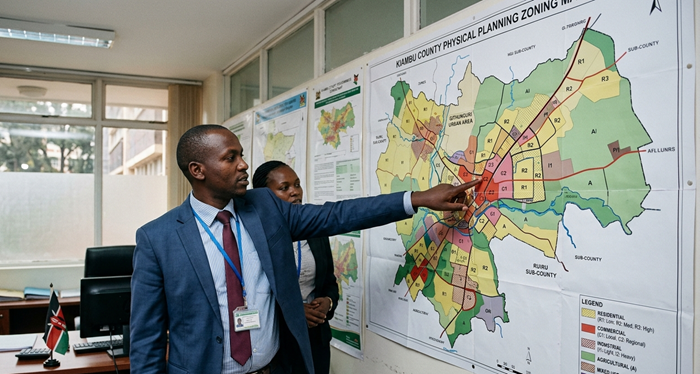
7. ✅ Confirm the Zoning and Permitted Land Use
Not all land in Kenya can be used for whatever you want. Every parcel has an approved land use classification determined by the county government's physical planning department.
Common land use zones in Kenya:
- Residential — for housing only
- Agricultural — for farming; building a house may require change of user
- Commercial — for shops, offices, businesses
- Industrial — for factories and warehousing
- Green zone / riparian reserve — no development allowed at all
What to do:
- Ask the county planning office for the zoning map covering your parcel
- Confirm whether your intended use is permitted
- If you need to change the use, factor in the cost and time of a Change of User application
âš ï¸ NB: Buying agricultural land to build a residential estate without a change of user approval is illegal. Structures built on wrongly zoned land can be demolished by the county.
8. ✅ Check if the Land is in a Protected or Reserved Area
Some land in Kenya falls within zones where private ownership or development is restricted or prohibited entirely. These include:
- Riparian reserves — land within a set distance of rivers, lakes, and wetlands
- Road reserves — land earmarked for road expansion
- Forest reserves and national parks
- Power line wayleaves — corridors reserved for electricity infrastructure
- Government land earmarked for public projects
âš ï¸ NB: Land sold within these zones — even with a title deed — can be repossessed by the government without compensation. This has happened to many buyers across Kenya.
💡 Tip: A physical planner or surveyor can overlay your parcel against official reserve maps to confirm it is free from any restrictions.
9. ✅ Involve a Qualified Conveyancer or Property Lawyer
Never handle a land transaction in Kenya without a qualified lawyer — specifically one specialising in conveyancing (property law). This is not optional, and it is not just for big purchases.
What a conveyancer does for you:
- Conducts an independent legal due diligence on the title
- Drafts or reviews the Sale Agreement
- Prepares the Transfer Documents
- Ensures stamp duty is paid correctly
- Facilitates the handover of the original title deed
- Registers the transfer at the Lands Registry
âš ï¸ NB: Using the seller's lawyer is a conflict of interest. Always hire your own independent conveyancer. Legal fees for land transactions in Kenya are regulated by the Advocates Remuneration Order — typically a percentage of the purchase price.
💡 Tip: Find verified property lawyers and legal professionals on The Homes Lab Professionals directory.
10. ✅ Understand All the Costs Before You Commit
The price the seller quotes is never the final amount you pay. Land transactions in Kenya come with several additional costs that buyers frequently underestimate.
Typical additional costs for a land buyer in Kenya:
| Cost | Who Pays | Approximate Amount |
|---|---|---|
| Stamp Duty | Buyer | 2% (agricultural) or 4% (urban) of land value |
| Legal/Conveyancing Fees | Buyer | ~1–2% of purchase price |
| Land Search Fee | Buyer | Ksh 500 |
| Survey/Beacon Confirmation | Buyer | Ksh 10,000 – 50,000+ |
| Transfer Registration Fee | Buyer | Varies |
| Clearance of Land Rent Arrears | Seller (but confirm) | Varies |
| Land Rates Clearance | Seller (but confirm) | Varies |
💡 Tip: Always budget an additional 5–8% on top of the purchase price to cover all transaction costs comfortably.
âš ï¸ NB: Stamp duty in Kenya is paid to the Kenya Revenue Authority (KRA) and is a legal requirement. Attempting to undervalue a property to reduce stamp duty is tax fraud and can invalidate the transaction.
🚀 Final Thoughts
Buying land in Kenya is one of the best investments you can make — but only if done correctly. The 10 checks above are not bureaucratic box-ticking. They are your financial protection against fraud, disputes, and costly mistakes.
To summarise your pre-purchase checklist:
- ✅ Verify the title deed via Ardhisasa land search
- ✅ Confirm the seller is the registered owner
- ✅ Check for encumbrances — cautions, caveats, charges
- ✅ Do multiple physical site visits
- ✅ Hire an independent surveyor
- ✅ Confirm land rates and rent are cleared
- ✅ Check the zoning and permitted use
- ✅ Confirm the land is not in a protected or reserved area
- ✅ Hire your own conveyancer
- ✅ Budget for all transaction costs upfront
💡 Tip: Once your purchase is complete, list your land or property on The Homes Lab to connect with thousands of genuine buyers — or explore verified land listings available right now.
Browse land for sale across Kenya today 👉 thehomeslab.com/properties/sale/land
Was this helpful? Share it with anyone planning to buy land in Kenya — this checklist could save them from a very expensive mistake.